


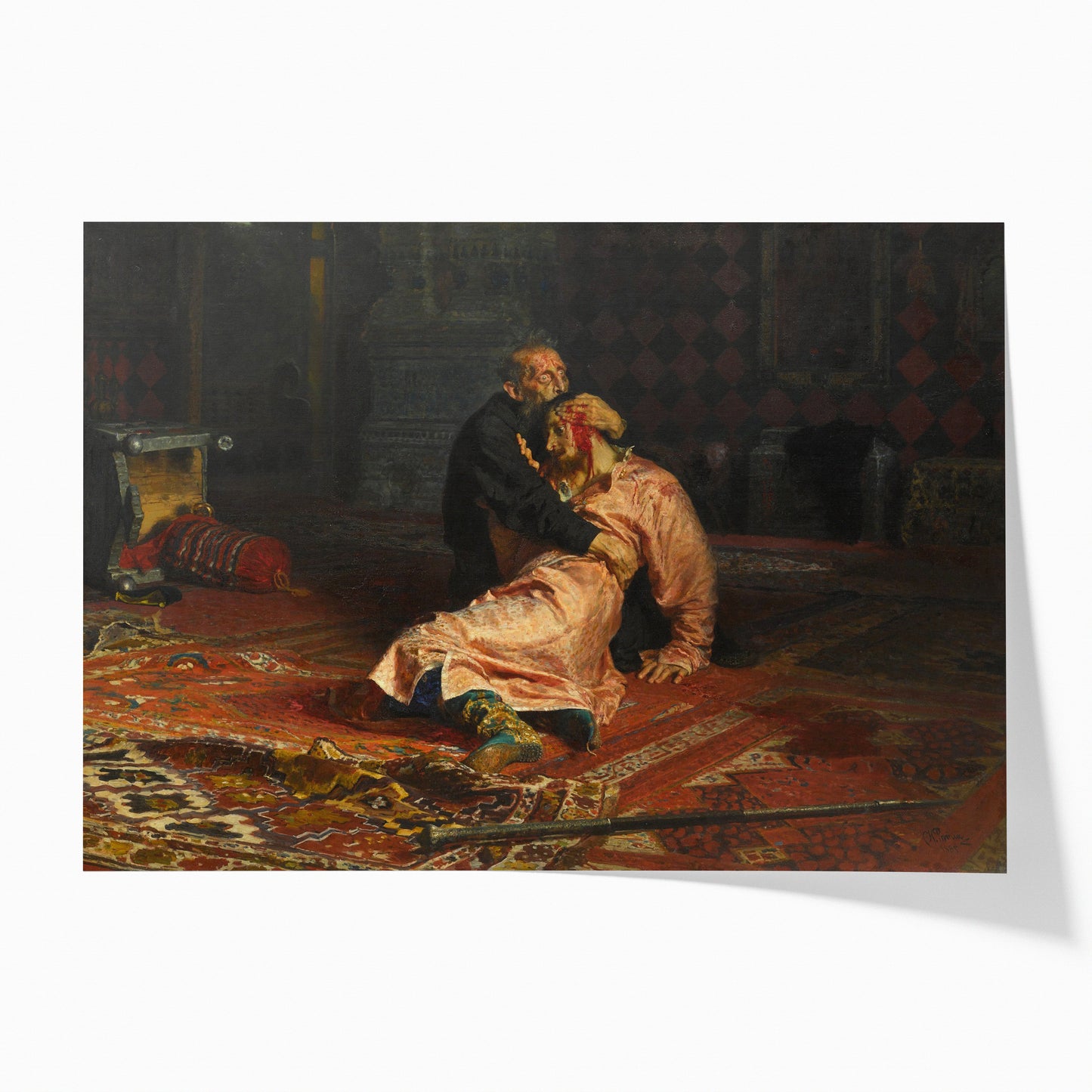
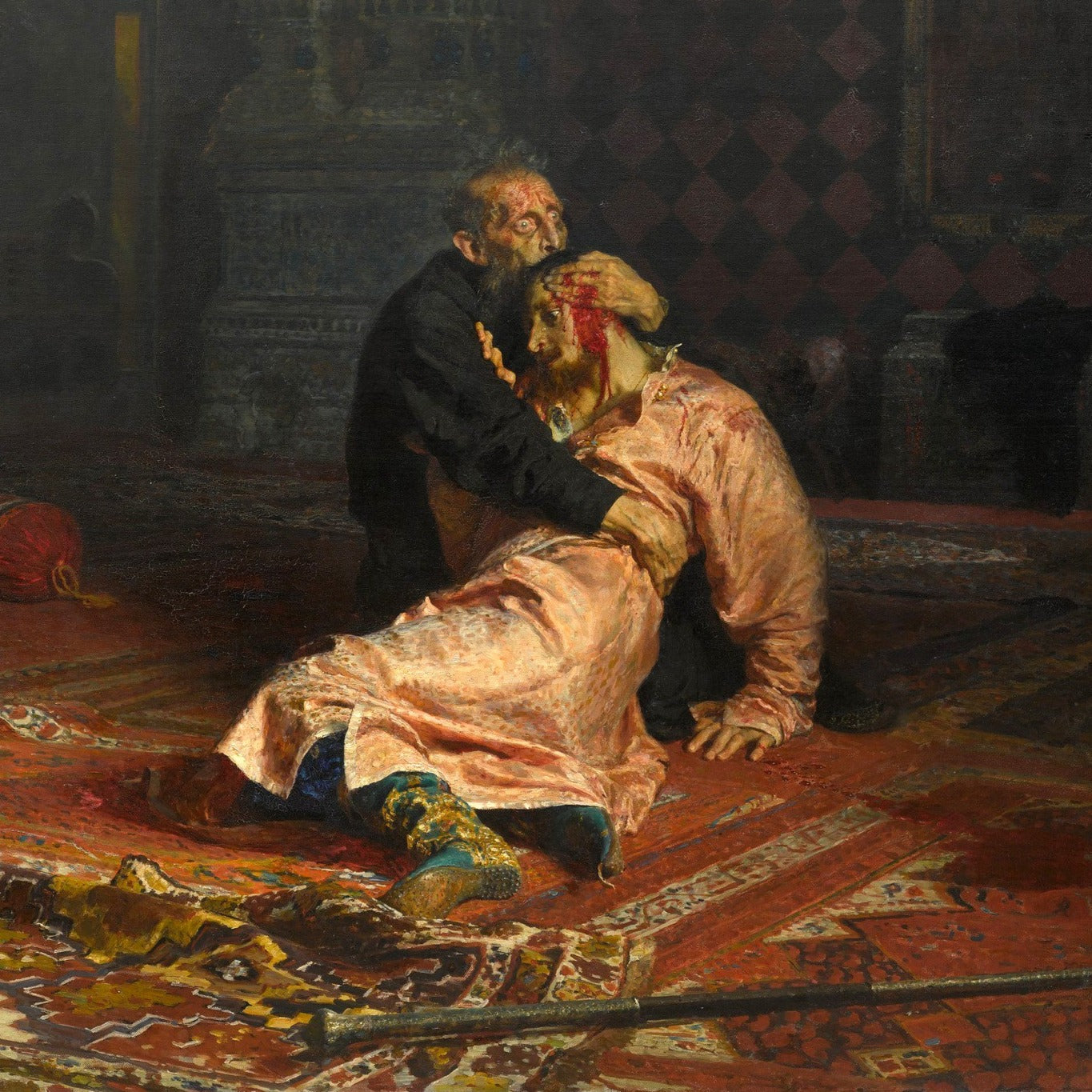
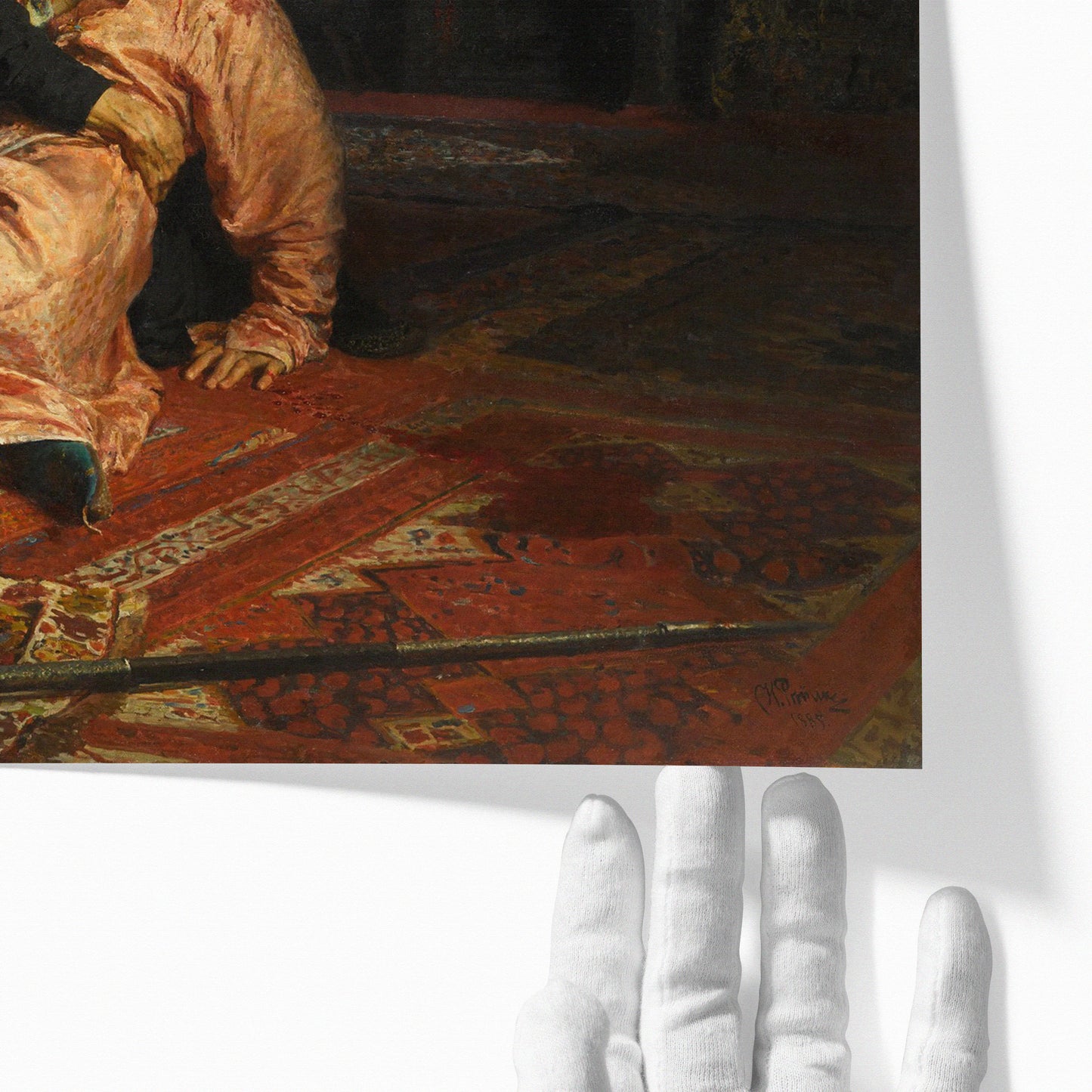
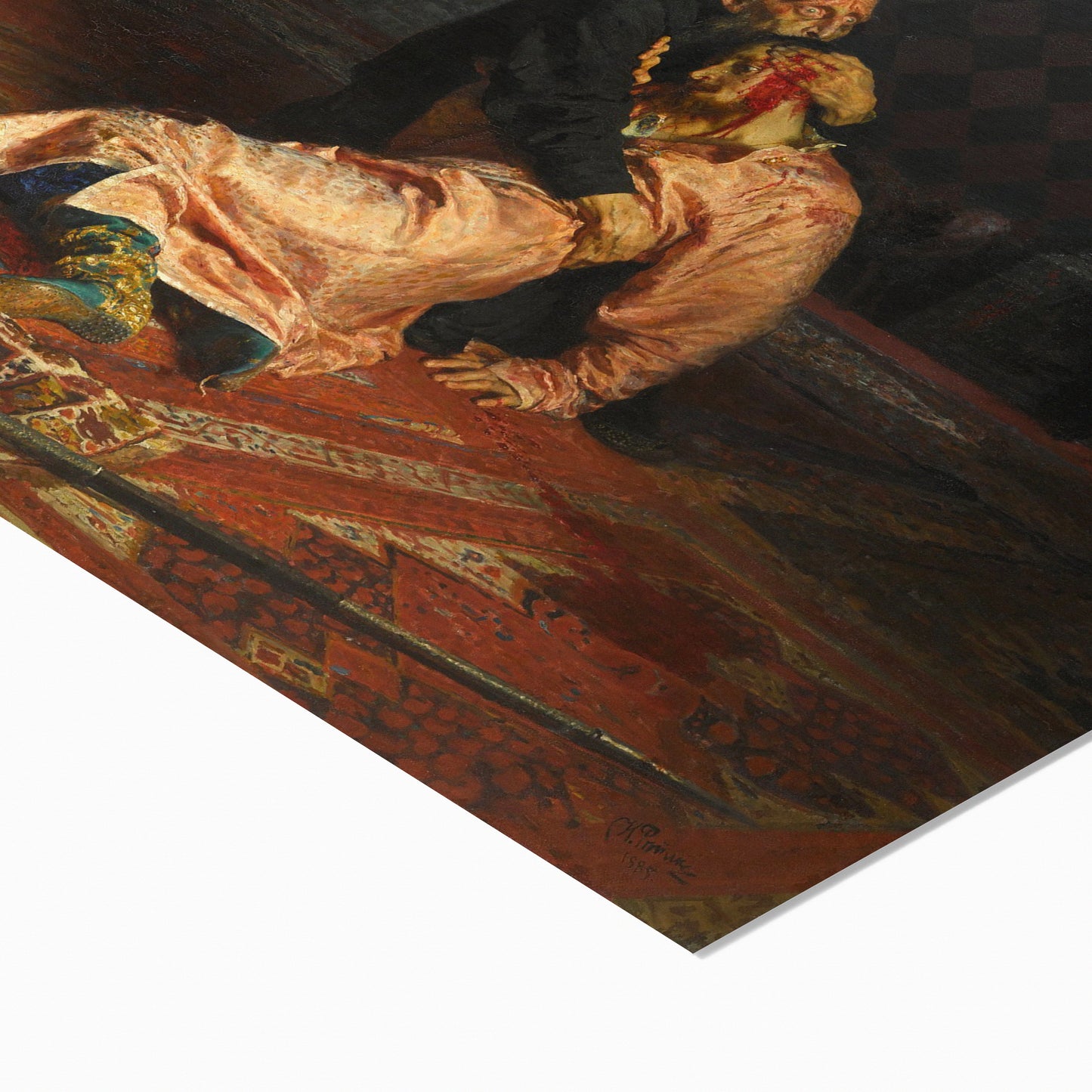
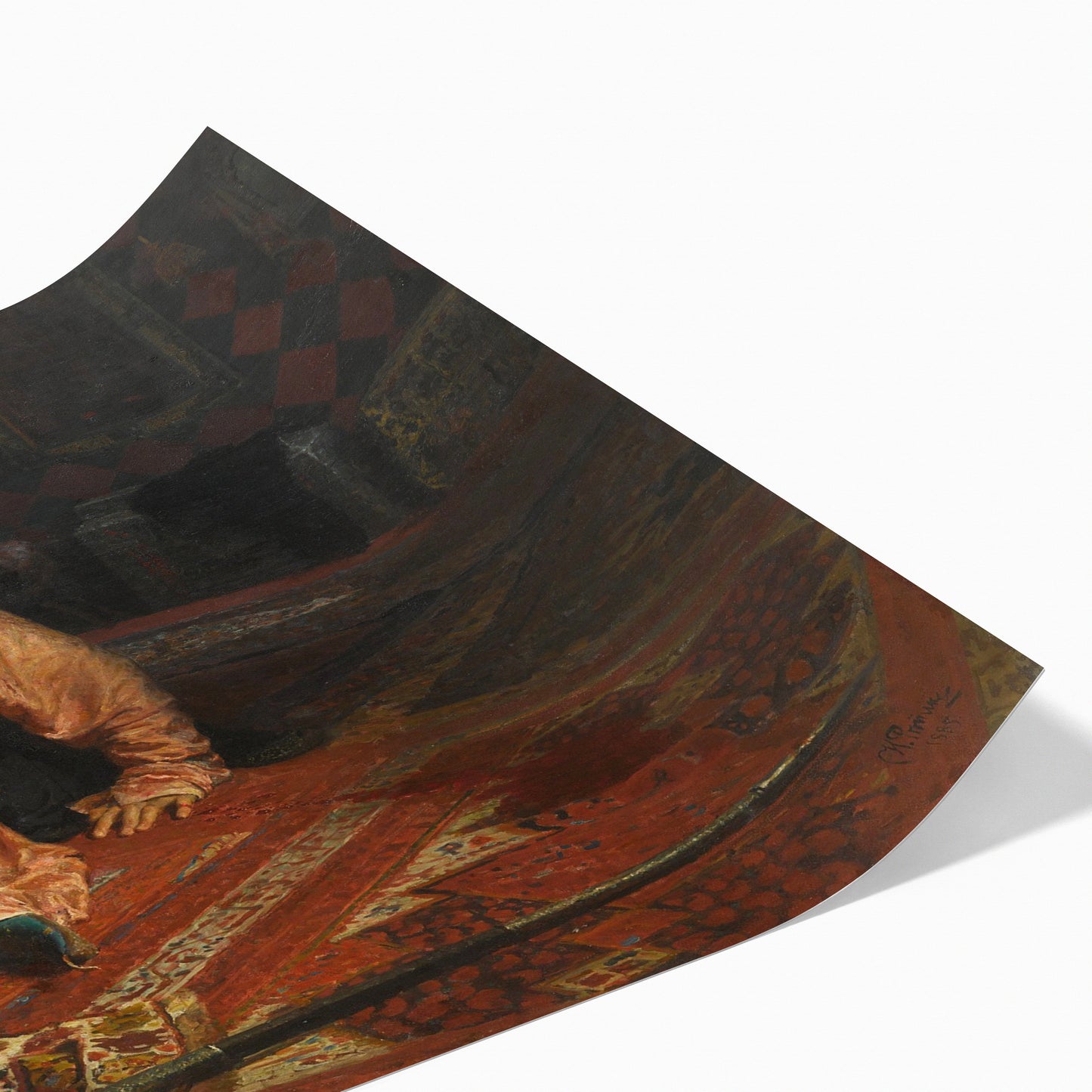
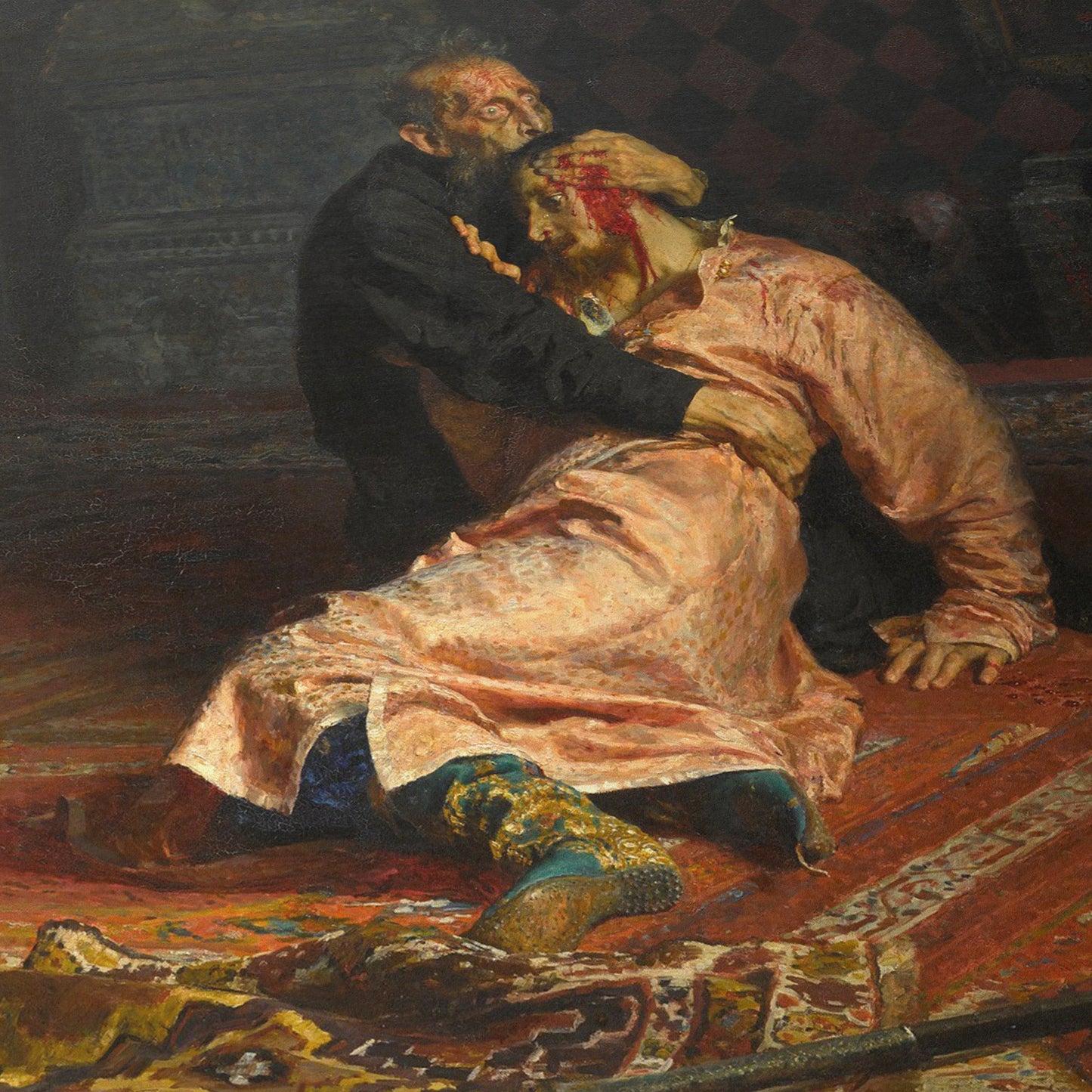
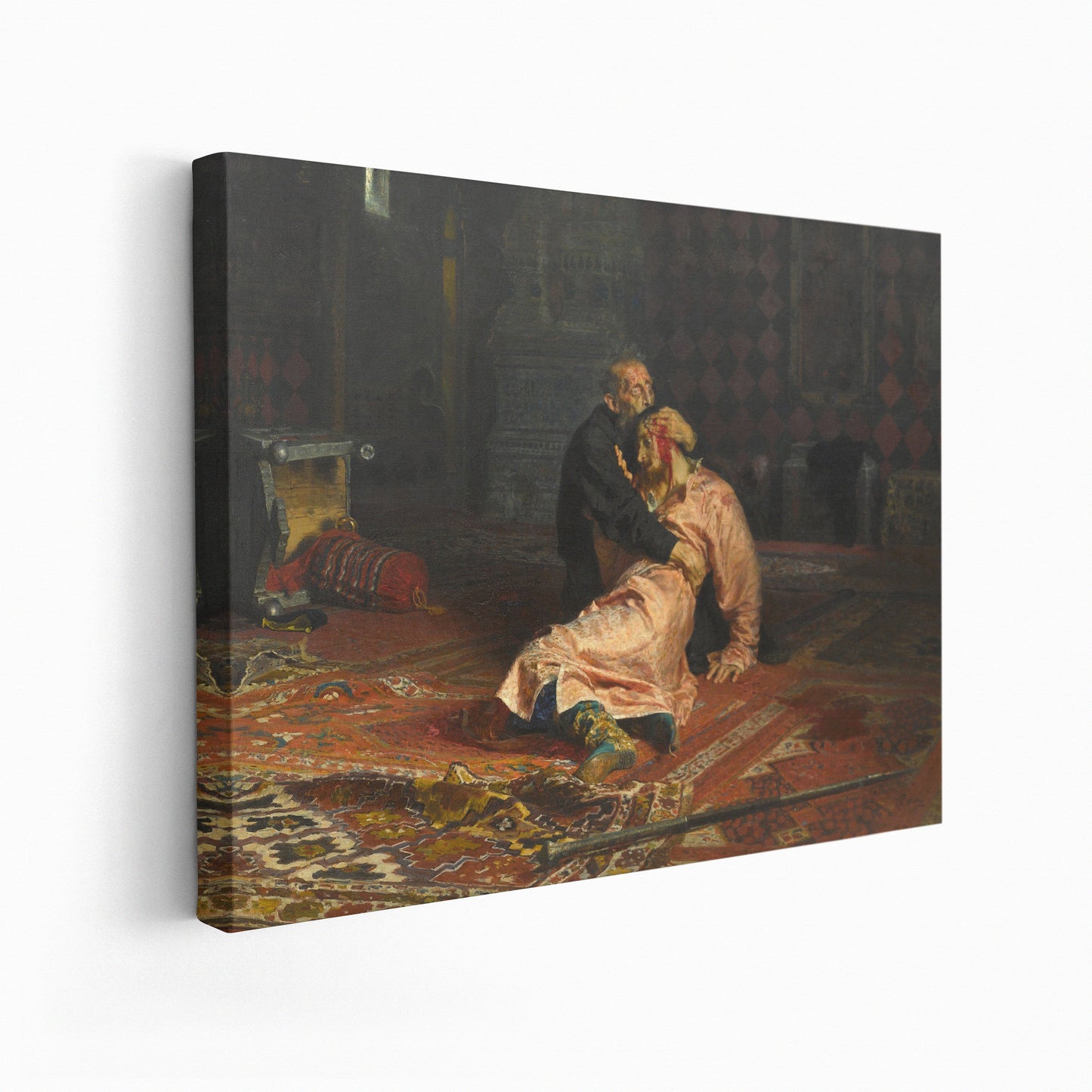
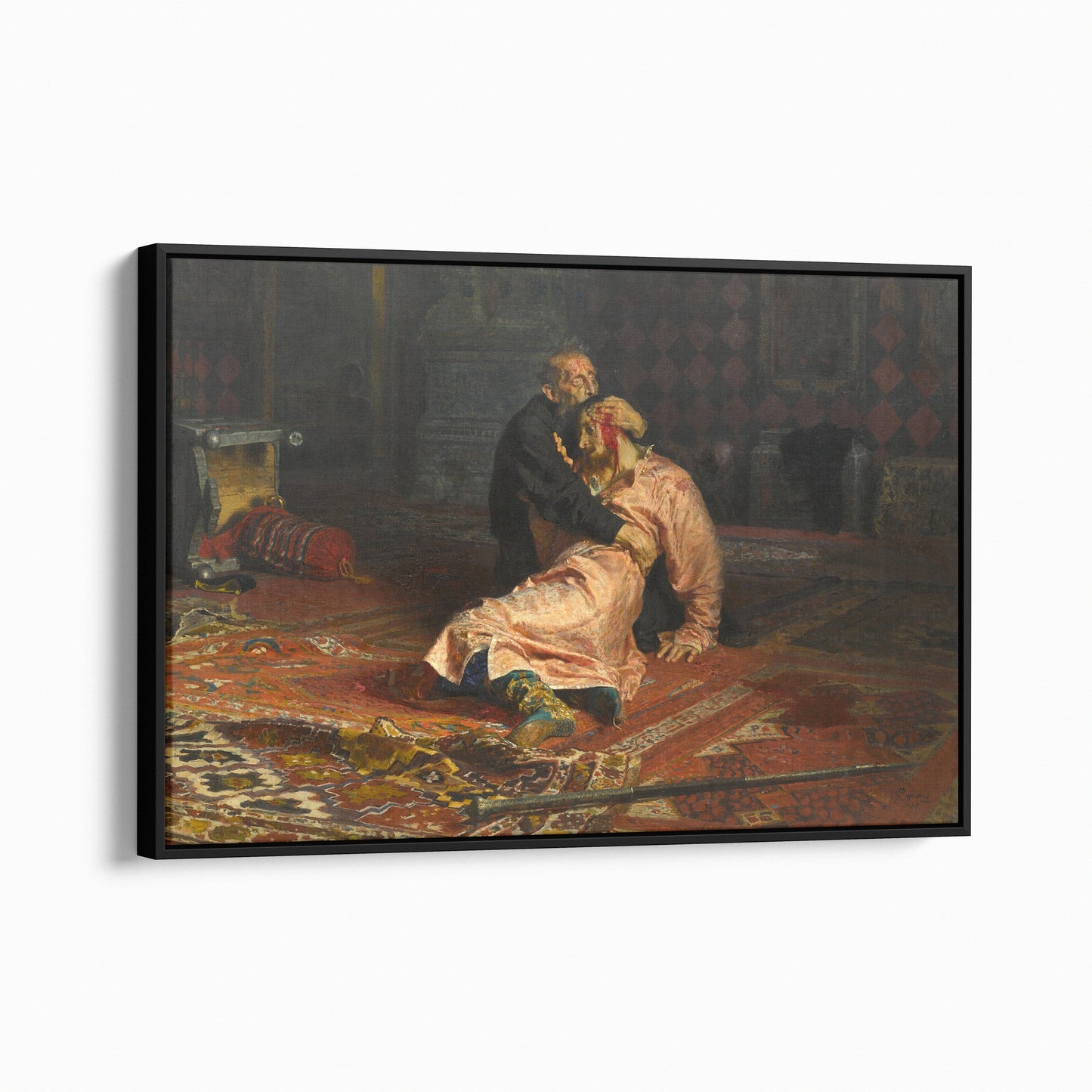
- Title Ivan the Terrible and His Son Ivan on 16 November 1581 (Иван Грозный и сын его Иван 16 ноября 1581 года); often referred to simply as Ivan the Terrible and His Son Ivan or Ivan the Terrible Killing His Son
- Artist Ilya Yefimovich Repin (Ukrainian-born Russian Realist; member of the Peredvizhniki [Itinerants]; Chuguev, Russian Empire [now Ukraine], 5 August [O.S. 24 July] 1844 - Kuokkala, Viipuri Province, Finland [now Russia], 29 September 1930)
- Year of creation 1883-1885 (the date 1883 marks the start of work; the painting was completed in 1885. In his memoirs Repin recalled three principal sources of inspiration: the 1881 assassination of Tsar Alexander II by members of Narodnaya Volya, the music of Nikolai Rimsky-Korsakov [particularly the symphonic suite Antar], and the bullfights he had witnessed during a trip to Spain in 1883. The composition depicts the moment immediately after Tsar Ivan IV "the Terrible" had struck his eldest son and heir Tsarevich Ivan Ivanovich on the temple with the pointed metal-tipped end of his sceptre during an argument on 16 November 1581 — most likely producing an epidural hematoma — and now cradles the mortally wounded young man on a blood-red carpet in a darkened room of seventeenth-century Russian furnishings. The historical incident was best known to Repin through the account in Nikolay Karamzin's History of the Russian State. Repin used his friend the Peredvizhniki painter Grigoriy Myasoyedov as the model for Ivan and the writer Vsevolod Garshin — who would himself commit suicide in 1888 — for the Tsarevich; Ivan wears an austere black coat while the Tsarevich is in a pink satin dressing gown and teal-green boots. When publicly exhibited in 1885 the painting was banned by Emperor Alexander III in April of that year — the first painting to be censored in Russia — though the ban was lifted in July; Tretyakov, who had already purchased it, was at first unable to display it. The work is now also commonly known as Ivan the Terrible Killing His Son)
- Technique/Medium Oil on canvas
- Original dimensions 199.5 x 254 cm (78.5 x 100 inches)
- Collection/Museum State Tretyakov Gallery, Moscow (purchased directly from the artist by Pavel Tretyakov in 1885 for his gallery; on permanent display, though the painting has twice been attacked by visitors — in 1913 by Abram Balashov, who stabbed it three times with a dagger crying "Blood! Why the blood? Down with blood!" — the canvas was restored by Repin himself — and again on 25 May 2018 by Igor Podporin, who damaged the central panel with a metal pole, requiring a four-year restoration completed in 2022)
We provide Worldwide Shipping with tracking to most locations around the world. We operate a global production network, which allows us to produce and deliver orders locally for free. Our production facilities are located in the US, Canada, UK, Spain, and Australia.
Shipping times around the world vary based on your location. Here are our estimated delivery times from the day of purchase:
- US, Canada: 7-10 business days
- Continental US, Alaska and Hawaii: 10-14 business days
- UK: 7-10 business days
- Australia: 7-10 business days
- EU: 10-14 business days
- Rest of the World: 14 business days
Above times are estimates, and include handling time to prepare your order. Business days exclude weekends and holidays. Please refer to the delivery time specific to your shipping address that is presented during the checkout.
We currently ship with the following global shipping partners: FedEx, UPS, DHL, GLS, Canada Post, Royal Mail, Aramex, and Australia Post.
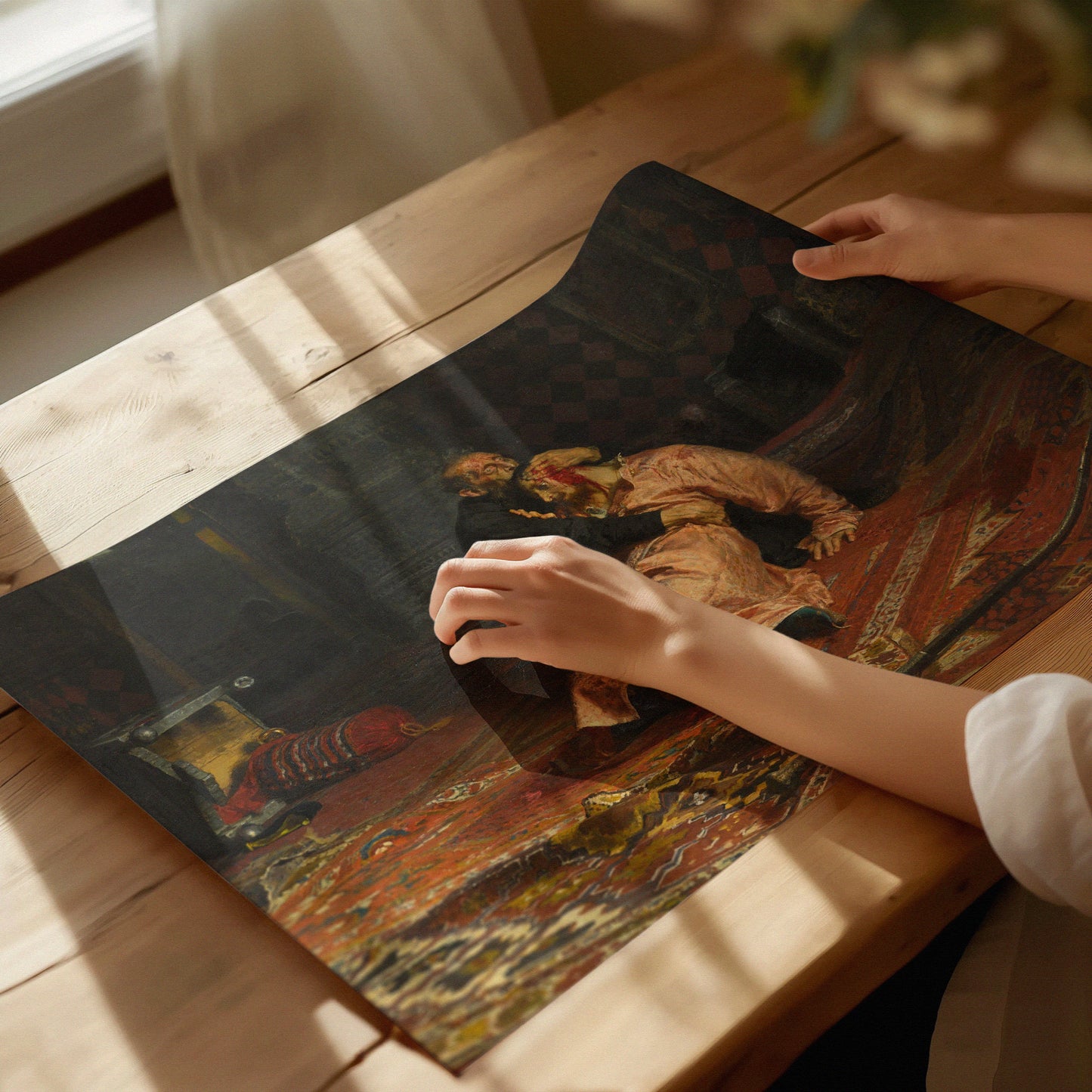
Museum-quality reproductions
Each print is crafted with meticulous care, ensuring every detail captures the essence of the original masterpiece.
This way, you receive the most faithful reproduction possible, bringing the museum experience directly into your home.
Why Choose Us?
Inspiraggio
Amazon
Others
Handcrafted

Museum Quality
Exact Reproductions
+100 Years Guarantee
Support Youtube Channel
Access to Weekly Newsletter
Best Sellers
-
Pandemonium | John Martin | 1841
Regular price From €32,95Regular priceUnit price per -
The Devil's Checkmate | Friedrich August Moritz Retzsch | 1831
Regular price From €32,95Regular priceUnit price per -
Daniel in the Lion's Den | Briton Rivière | 1872
Regular price From €32,95Regular priceUnit price per -
The Bat Woman | Albert Joseph-Pénot | 1890
Regular price From €32,95Regular priceUnit price per


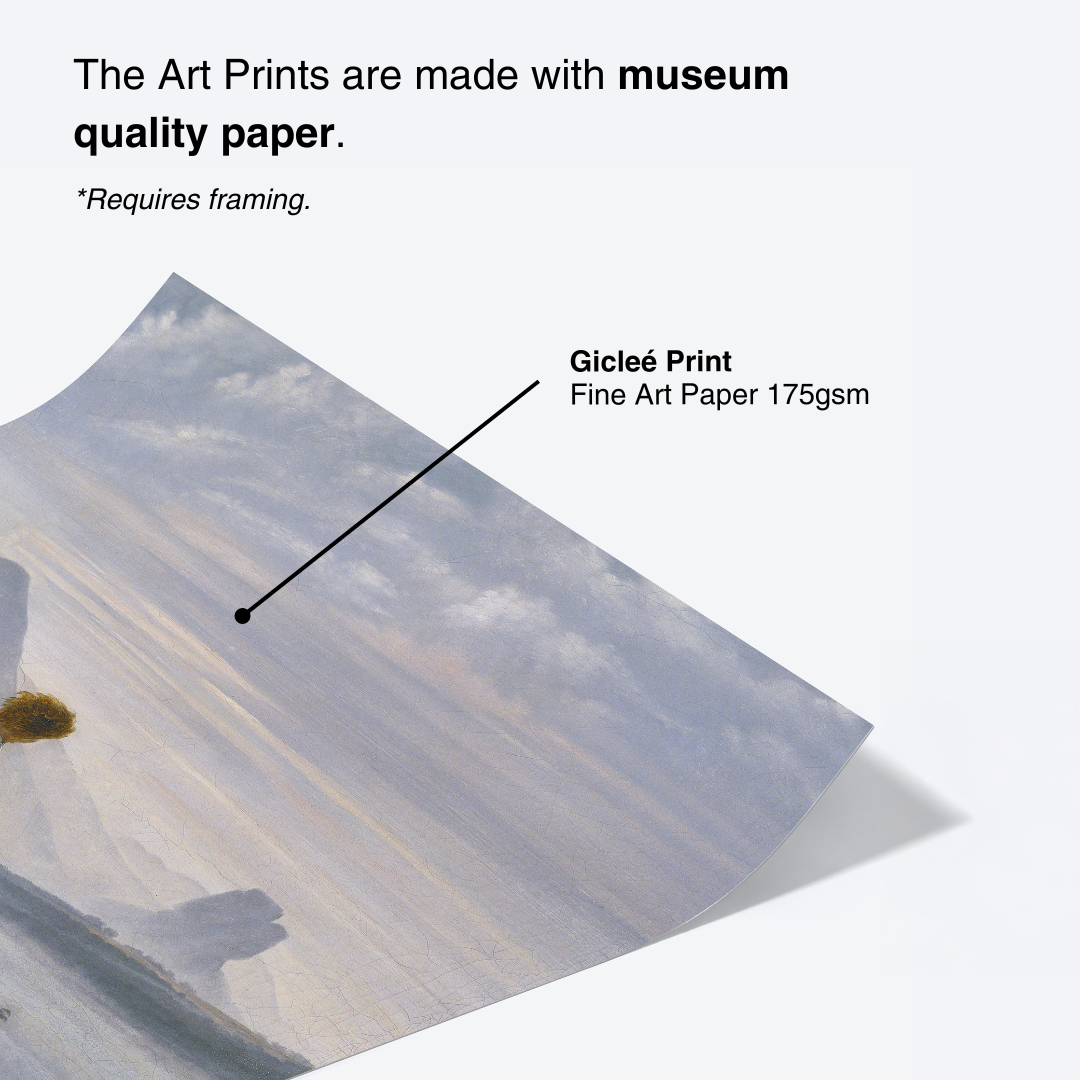
Art Prints
Bright & intensive color spectrum. Best choice if you plan to frame it by yourself/local craft shop.
*Requests framing (frame is not included with this option)
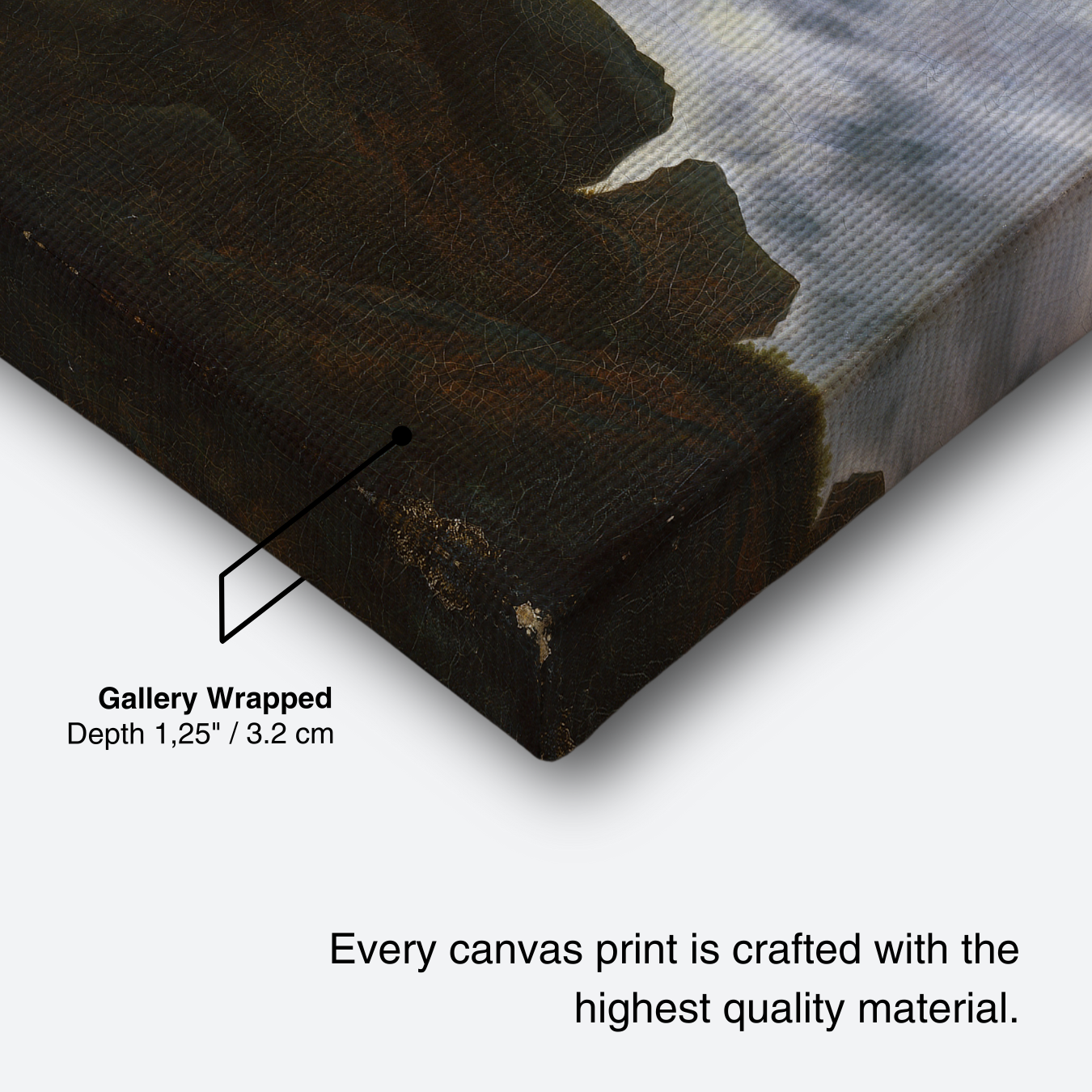
Canvas Features
Our gallery wrapped canvas framed with a wooden frame and ready to hang out of the box with hanging hardware pre-installed.
*Specially coated with poly-cot canvas for the highest durability and best color vibrancy. Archival grade canvas.

Black Frame
Black floating frame is a popular add-on to any canvas during the purchase. The frame is build using our proprietary profile radial pine, and coated with black graphite that gives it a gallery quality, luxurious matte finish.
Mobile Case Collection
-
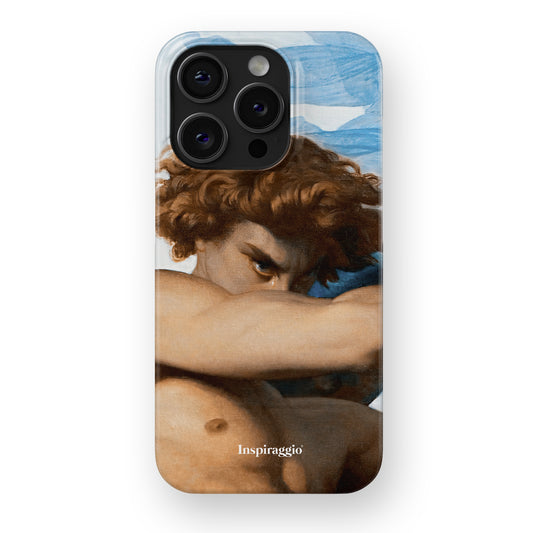
The Fallen Angel | Alexandre Cabanel | 1847
Regular price From €35,00Regular priceUnit price per -
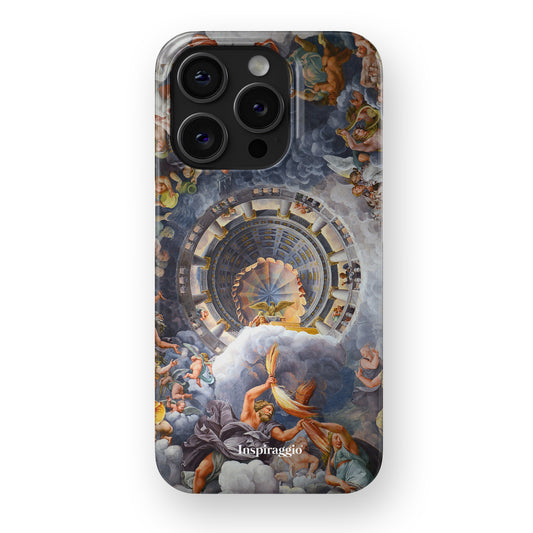
The Fall Of Giants | Giulio Romano | 1522
Regular price From €35,00Regular priceUnit price per -
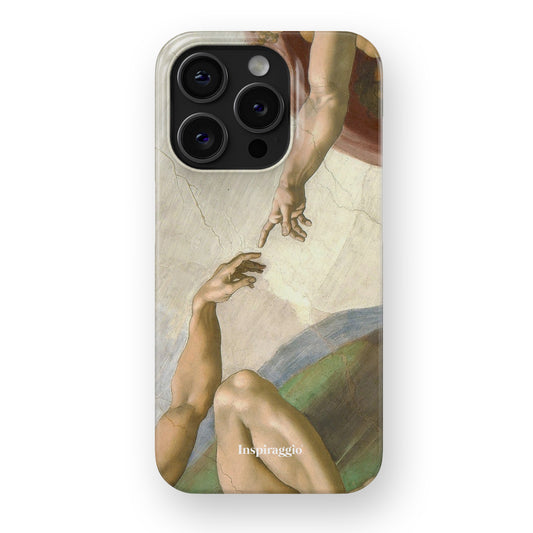
The Creation of Adam | Michelangelo Buonarroti | 1508-1512
Regular price From €35,00Regular priceUnit price per -
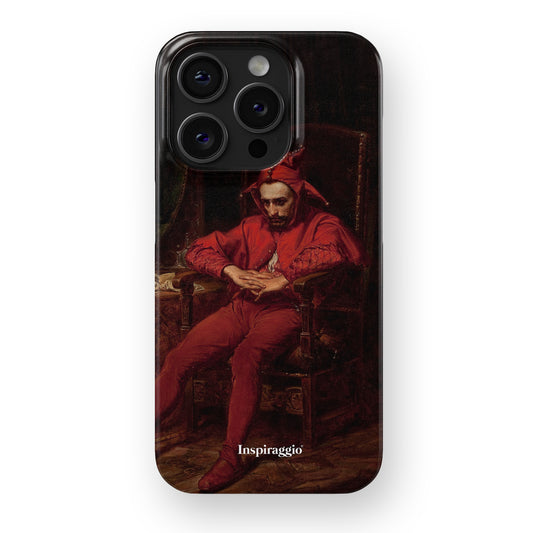
Stańczyk | Jan Matejko | 1862
Regular price From €35,00Regular priceUnit price per
-

-

Lifetime Guarantee
Returns & ExchangesWe have confidence in our materials; your order comes with a lifetime guarantee.
-

We're Here To Help
Customer ServiceWe want to make your experience amazing! Our team is ready to help.
